

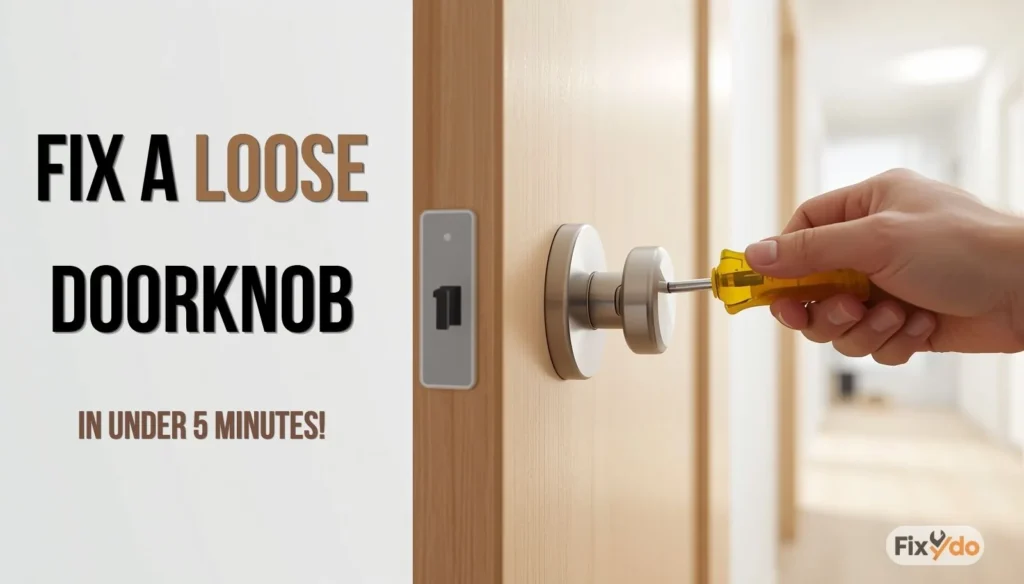
A wobbly doorknob is one of those things you put up with for way longer than you should. It’s not just annoying, a knob that spins loose or rattles in your hand usually means the latch isn’t seating properly anymore, and that’s a small security problem hiding inside an even smaller inconvenience.
The fix is almost always quick. The tricky part is that “loose doorknob” actually covers a handful of different problems depending on what kind of knob you have, and a lot of guides just tell you to “tighten the screws” without explaining what to do when you can’t find any screws in the first place. This guide covers both — the standard fix, and what to do when your knob doesn’t seem to have a way in.
Crucial Safety Tip Before You Start
Always keep the door OPEN while you are working on it. If you take the knob apart with the door closed and the internal latch gets stuck, you could accidentally lock yourself inside the room! Use a doorstop to keep it wedged open until the job is done.
Figure Out What Kind of Knob You Have First
Before you touch a screwdriver, take thirty seconds to look at your knob. This matters because the fix is different depending on the type:
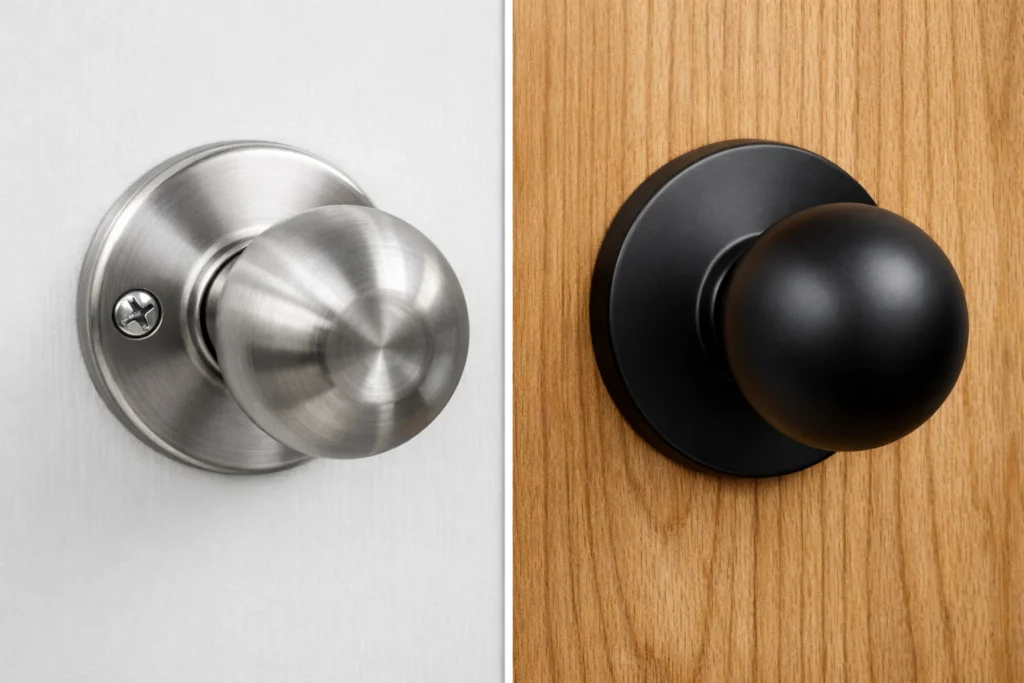
- Tubular knob (most common in modern homes) — round or lever knob, usually with a visible rose or plate against the door, sometimes with two small screws showing on the interior side.
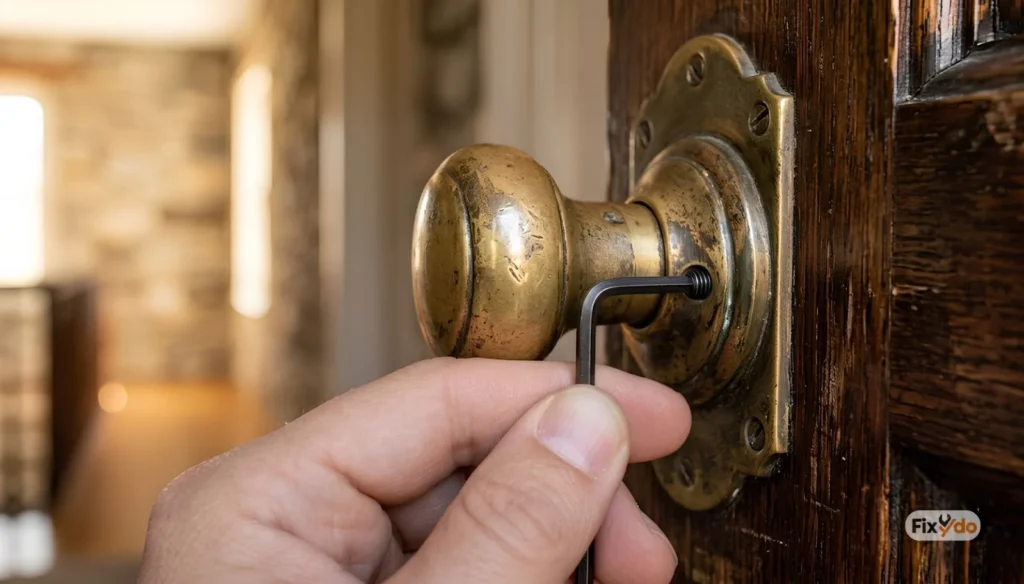
- Mortise knob (older homes, pre-1950s or restored properties) — knob screws onto a square metal post (the spindle) and is held with a tiny set screw underneath or on the side of the knob itself.
- Privacy/passage knob with a concealed rosette (no visible screws) — this is the one that trips people up. The rose or collar snaps over the mounting screws, so from the outside there’s nothing to unscrew at all. Common on interior bedroom and bathroom doors.
Once you know which one you’re dealing with, skip to the matching section below.
What You’ll Need
- Phillips or flathead screwdriver
- A small flathead screwdriver or a stiff putty knife (for popping off a rosette)
- A paperclip, bobby pin, or small Allen wrench (for releasing modern knobs)
- Allen key / hex key (Pro Tip: Most mortise knob set screws require a 3/32″ or 5/64″ Allen key)
- A toothpick or a few wooden matchsticks, plus a bit of wood glue (for stripped wood screw holes)
- A flashlight — most of the small parts you’re hunting for are tiny and easy to miss
None of this needs to cost you anything if you’ve got a basic toolkit already.
Fixing a Standard Tubular Knob (Visible Screws)
This is the setup most people have, and it’s the easiest to fix.
- Look at the interior side of the door — you’ll usually see two screws holding the rose (the round plate) against the door.
- Tighten both screws with a screwdriver, turning clockwise. Go slow and even — tighten a little on one, then a little on the other, so the plate pulls in flat rather than at an angle.
- Give the knob a wiggle. If it’s solid, you’re done.
- If it’s still loose, remove the screws completely and check the threads. If these long machine screws are stripped (spinning without gripping the other side), you will likely need to replace the doorknob, as the internal metal threads have failed.
Fixing a Mortise Knob (Older Doors, Set Screw Style)
Mortise locks are a different animal, and they loosen in one of two specific spots.
1. The Set Screw
The knob threads onto a square post and is locked in place by a small set screw on the collar of the knob, right where it meets the door. If the knob spins further than it should before catching the latch, this screw is loose or missing.
- Turn the knob so the set screw sits directly over the flat side of the square post underneath.
- Tighten it down with a small screwdriver or Allen key — it’s genuinely hard to overtighten this one.
- Test the knob. If it still slips after tightening, back it off slightly and re-seat it, since it may be catching an edge of the post rather than sitting flat.
2. The Post Length
Mortise knobs can also be adjusted for doors of different thickness, which means the two knobs can end up with too much play between them, making the whole assembly feel loose and wobbly.
- Loosen the set screw so the knob spins freely on the post.
- Turn the knob clockwise to shorten the distance between the two sides.
- Tighten the set screw again once the fit feels snug, and test the latch to make sure it still engages properly.
The Knob Has No Visible Screws At All (Concealed Rosette)
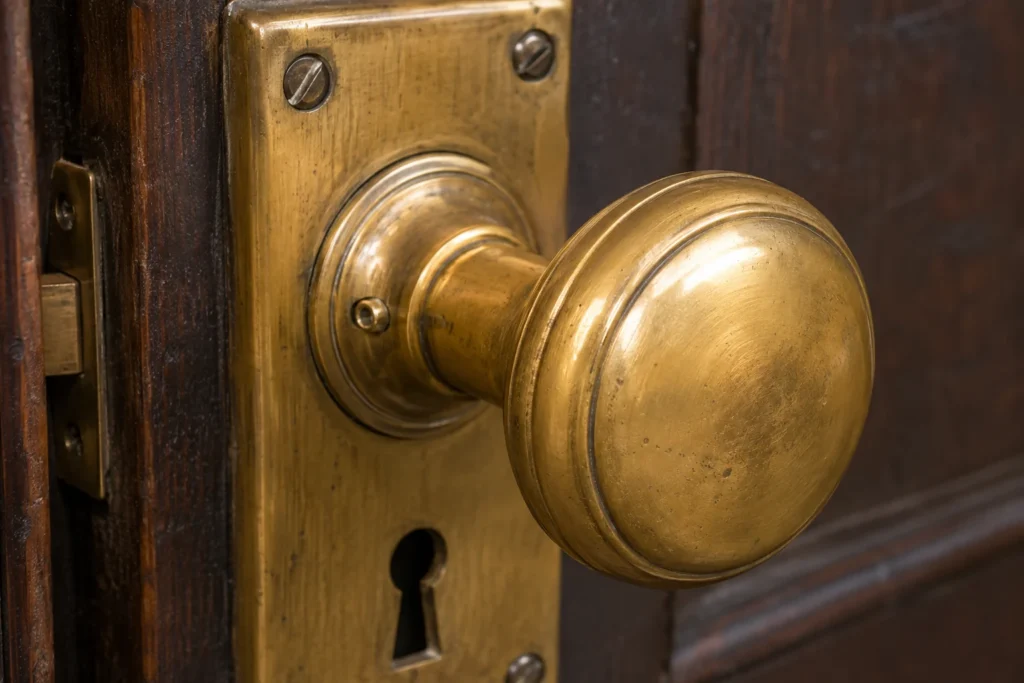
This is genuinely a different problem from a knob with screws that are just hidden under a decorative cap. There’s no screwdriver slot staring back at you anywhere.
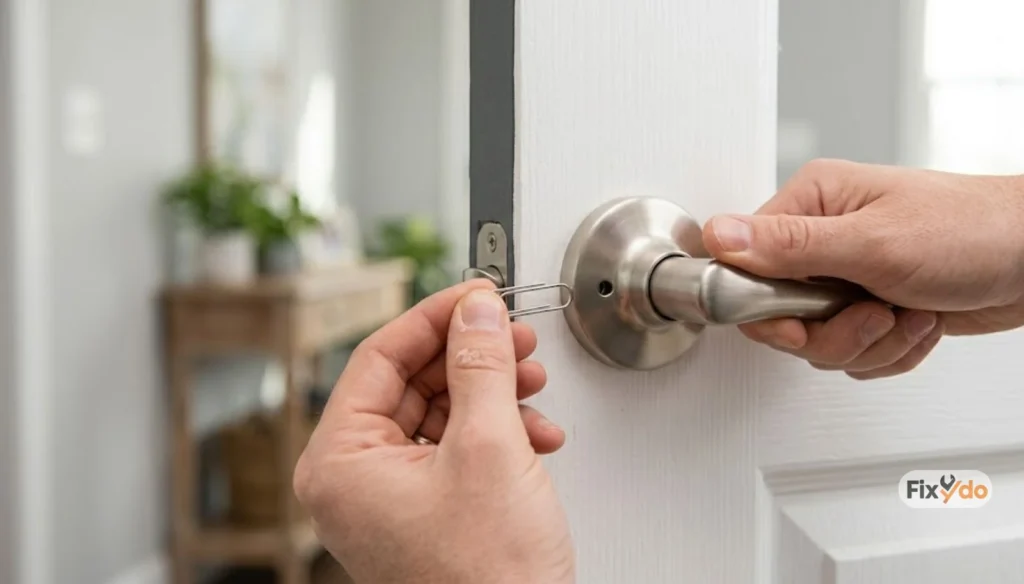
Nine times out of ten, this is a passage or privacy knob with a spring-loaded or snap-on rosette. The screws are there — they’re just underneath a rose that’s designed to hide them completely. To get to them, you usually have to remove the knob (handle) first, then the rose. Here’s how:
- Remove the knob handle: Look for a small spring-loaded catch, tab, or tiny hole on the shank of the knob (the part connecting the handle to the door).
- Round Knobs: Usually have a tiny pinhole (perfect for a paperclip). Press your tool firmly into the hole and pull the knob straight off the spindle. Handyman Tip: If the pin won’t press inward, try turning the knob slightly while pressing. Sometimes the internal mechanism needs to be rotated to align the release pin.
- Lever Handles: Many modern lever-style handles (like Kwikset or Schlage) don’t use a pinhole. Instead, look underneath the neck of the lever for a tiny Allen set screw. Use a small hex key (usually 3/32″) to loosen this screw, then slide the handle off.
- Pop off the rosette: Now that the knob is out of the way, check the edge of the rose (the round plate against the door) for a small release notch. Insert a small flathead screwdriver into the notch and gently pry it off. If there’s no notch, gently pry around the seam until it pops off.
- Tighten the screws: Once the rose is off, you’ll find the two mounting screws underneath exactly like a standard tubular knob. Tighten them securely.
- Reassemble: Snap the rose back into place, then slide the knob back onto the spindle until it clicks and locks over the spring catch (or tighten the set screw back down if you have a lever handle).
Troubleshooting Spindle and Plate Issues
Sometimes you tighten every screw you can find and the knob is still loose. At that point, the issue usually isn’t the mounting screws.
A Worn Spindle (Mostly in older/vintage doors)
In older mortise locks, the spindle is the square metal rod running through the door connecting both knobs. Constant use rounds off its edges over time, and once that happens, the knob won’t sit tight no matter how much you tighten the set screw.
- The Fix: Remove the knob, slide the spindle out, and check its edges. If they’re rounded, replace it with a matching spindle from the hardware store. (Note: If a modern tubular lock feels loose internally, it’s usually a broken internal spring or chassis, which means the whole lock needs replacing).
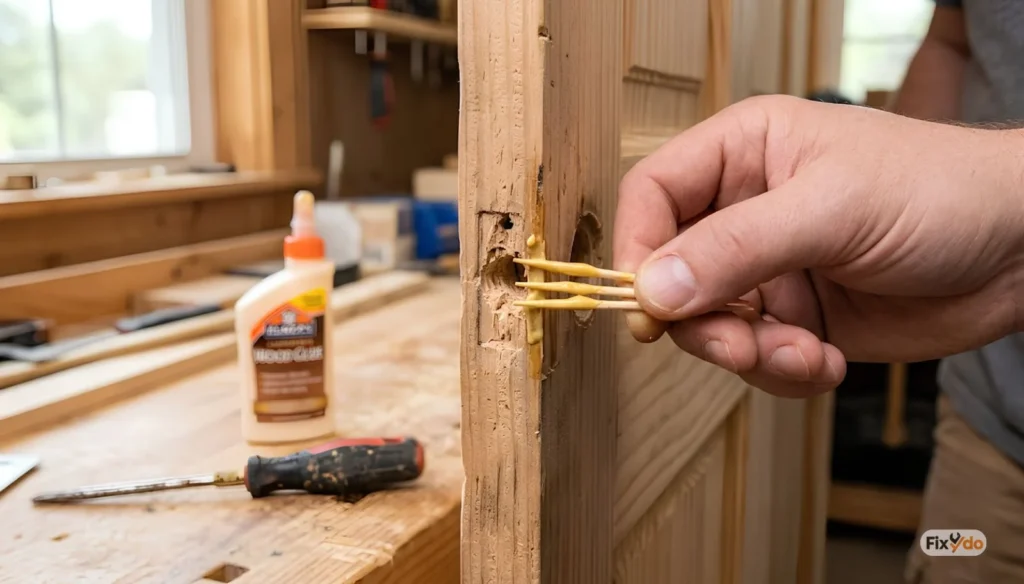
Stripped Wood Screw Holes
If the wood around the screw holes has worn out, the screw will spin without ever gripping. (Note: This applies to the wood screws on the latch plate at the edge of the door, or older mortise locks, NOT the long machine screws that go through the door).
- Remove the loose wood screw completely.
- Dip a couple of wooden toothpicks or a matchstick in wood glue and pack them into the hole.
- Snap or trim off the excess once it’s flush, let the glue set for about 20 minutes.
- Reinsert the original screw — it’ll bite into the fresh wood and hold properly.
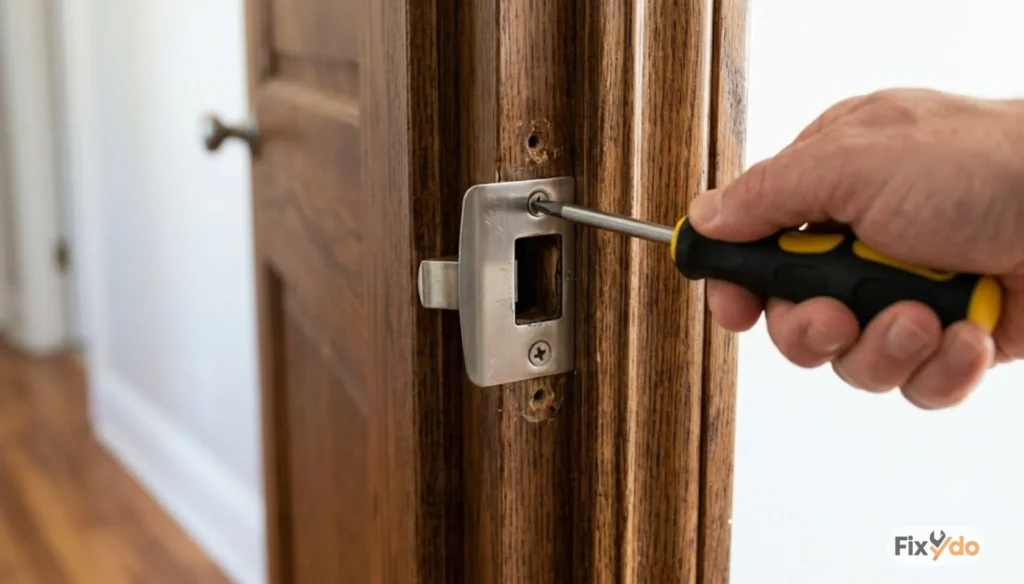
The Strike Plate (If the Door Rattles)
Sometimes you tighten the knob, but the door still rattles when closed. If the knob is solid but the door itself wiggles in the frame, the problem is actually the strike plate (the metal plate on the door frame where the latch rests). Tightening the two screws on the strike plate—or adjusting its metal tab slightly inward—will help fix the rattle.
Test It Properly Before You Call It Done
Don’t just wiggle the knob and walk away. Turn it fully and let go a few times, checking that the latch clicks in and retracts smoothly each time. A knob that feels tight but doesn’t operate the latch cleanly usually means something was reassembled slightly misaligned, and it’s worth taking thirty seconds to adjust it now rather than dealing with it again next week.
When to Replace the Knob
Sometimes tightening isn’t the best fix. Consider swapping the whole knob if:
- The internal mechanism rattles or feels loose even with the screws fully tightened (a sign of a broken internal chassis).
- The long machine screws connecting the two halves of a modern knob are stripped.
- The knob is old enough that replacement parts aren’t sold for it anymore.
- You’ve fixed the same knob twice already this year.
- You’re renovating anyway and want to upgrade the hardware.
A basic interior knob replacement is relatively inexpensive and takes about the same time as the repair itself, so it’s a practical alternative if you’d rather start fresh.
How to Prevent It Happening Again
- Don’t yank or slam doors — most of the wear on knobs and spindles comes from unnecessary force, not normal use.
- Give screws a quick check every few months on your most-used doors (bathroom, kids’ rooms, entrance).
- A tiny dab of thread-locking compound (like blue Loctite) on the screws of high-traffic doors keeps them from working loose between checks. Important: Only use removable Blue thread-locker on the metal machine screws that connect the two halves of the knob together. NEVER use Red thread-locker (which requires extreme heat to remove), and never use it on wood screws.
- If you’re replacing hardware, spending a bit more on solid brass or stainless components can hold up to wear noticeably better than cheaper plated finishes.
FAQ
Why is my door knob loose but has no screws?
It almost certainly still has screws — they’re just hidden under a rose or collar that snaps into place for a cleaner look. You usually need to remove the knob handle first by pressing a hidden release pin or loosening a set screw, then pop off the cover plate to reveal the screws underneath.
How do you tighten a round doorknob with no visible screws?
First, look for a tiny hole or slot on the side of the knob handle. Press a paperclip into it and pull the handle off. Next, pop off the decorative collar (rosette) covering the base of the knob. Tighten the two screws you’ll find underneath, then snap the cover and handle back into place.
Why does my door knob keep coming loose even after I tighten it?
For older doors, this usually points to a worn square spindle. For modern doors, it usually means the internal metal chassis or spring has broken, or the machine screws have stripped their threads. In modern locks, this often indicates it’s time for a replacement.
Can I fix a loose doorknob without removing it?
Sometimes, if the loose screws are visible from the outside. If the knob has a concealed rosette or the problem is a worn internal part, you’ll need to remove at least the handle and rose to access the screws.
Is a loose doorknob a security risk?
It can be. A knob that’s not seating properly often means the latch isn’t fully engaging with the strike plate, which makes the door easier to force open. It is generally best to fix this sooner rather than later, especially on exterior doors.
Still spinning after trying all of this, or turned out to be a broken internal mechanism? Get a local handyman through Fixydo to sort it properly.