
Opening your dishwasher at the end of a cycle only to find a pool of murky water at the bottom is frustrating. For residents across the UAE, a dishwasher not draining water is one of the most common household appliance complaints. Between the local climate and mineral-heavy tap water, your kitchen appliances face unique operating conditions that speed up wear and tear.
The good news is that many drainage failures do not require an immediate service call. By understanding the root causes and following a systematic troubleshooting approach, you can often clear the blockage yourself, protect your floors from water damage, and restore your dishwasher to proper working order.
Why Standing Water Happens in UAE Homes
Before jumping into the fixes, it helps to understand why water gets trapped inside the dishwasher tub. A dishwasher relies on a clean filter, an unobstructed drain hose, and a working pump to push wastewater out into your home plumbing system. When any of these components fail or become restricted, water remains trapped.
In the UAE, two major factors worsen drainage problems:
- Hard Water Buildup: Tap water in the region has a high mineral content, primarily calcium and magnesium. Over time, these minerals combine with grease and food particles to form a dense, chalky limescale that narrows hoses and clogs filters.
- High-Rise Plumbing Systems: Many residents live in apartments with shared drainage stacks or long run lengths to the kitchen sink. This makes the drainage system more sensitive to small clogs and debris.
Safety First: Preparing Your Appliance

Before attempting any DIY inspection or repair on your dishwasher, safety is your top priority. Always take these preliminary steps:
- Unplug the dishwasher from the wall socket, or switch off the corresponding circuit breaker in your home electrical panel.
- Place thick towels or a shallow tray underneath the appliance base to catch any residual water when disconnecting hoses.
- Wear protective rubber gloves to guard against sharp food debris or broken glass hidden in the standing water.
Step-by-Step DIY Guide to Fixing Standing Water
Work through these troubleshooting steps in order, starting with the easiest and most common fixes.
1. Clean the Filter Assembly
The dishwasher filter catches food scraps and grease to protect the internal pump. Over time, a heavily soiled filter blocks water from flowing down into the sump.
- Pull out the bottom dish rack to access the floor of the dishwasher.
- Locate the cylindrical or flat mesh filter, twist it counter-clockwise, and lift it out.
- Rinse the filter thoroughly under warm running water, using a soft brush to scrub away grease and mineral residue.
- Check the sump area underneath for any trapped foreign objects like glass shards, toothpicks, or bone fragments before locking the filter back into place.
2. Inspect the Drain Hose
The corrugated hose carries wastewater from your machine to the kitchen sink spigot or garbage disposal unit. If it becomes pinched or restricted, water cannot escape.
- Carefully pull the dishwasher out from under the counter to access the rear.
- Check the entire length of the drain hose for sharp bends, kinks, or crushing.
- Straighten out any twists and ensure the hose maintains a proper “high loop” near the cabinet wall to prevent wastewater from flowing backward into the machine.
3. Check the Sink Spigot and Knockout Plug
If your dishwasher is newly installed or connected to a new garbage disposal unit, a missed installation step is often the culprit.
- Locate where the dishwasher hose attaches to your kitchen sink waste pipe or garbage disposal inlet.
- Ensure that the plastic knockout plug inside the disposal inlet was completely removed during installation. If left in place, this plug completely blocks water drainage.
- Disconnect the hose from the spigot and clear out any built-up grease or food sludge with a stiff wire or small brush.
When to Call a Professional Repair Service
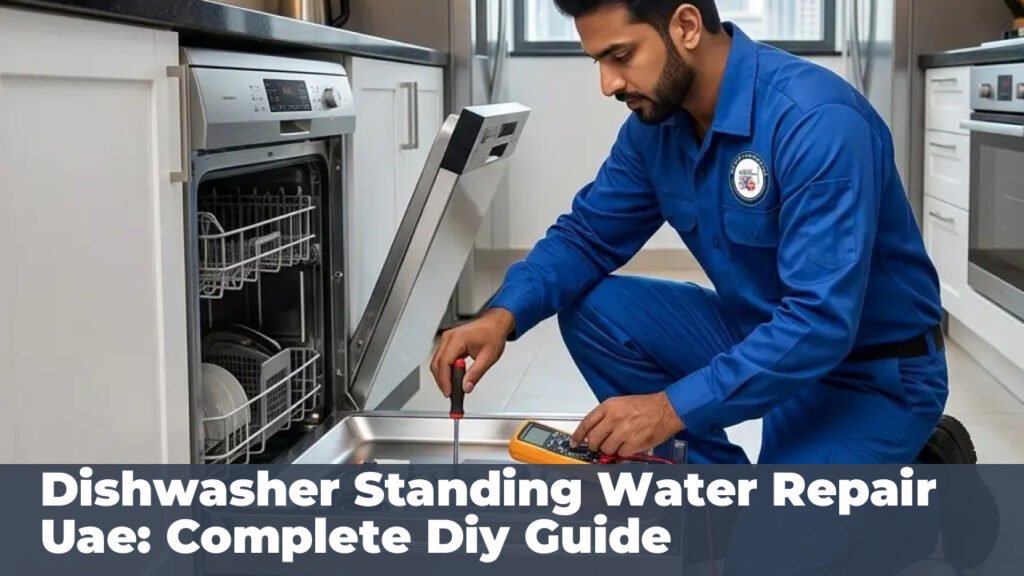
If you have cleaned the filter, straightened the hoses, checked the sink connection, and still find standing water in the tub, the problem is likely mechanical or electrical. You should contact a qualified appliance technician in the UAE if you notice:
- A Faulty Drain Pump: If the pump hums loudly without moving water, or remains completely silent during a drain cycle, the motor or impeller may be burned out.
- Persistent Error Codes: Modern machines display specific codes (such as i20, C2, OE, or AE) indicating a drainage failure that returns immediately after a reset.
- Electrical Issues: Wiring faults or control board failures require specialized diagnostic tools to repair safely.
Avoid using harsh chemical liquid drain cleaners. These products are highly corrosive and can permanently damage the rubber seals, delicate hoses, and internal pumps of your dishwasher.
Preventive Maintenance Tips for UAE Residents
Keeping your dishwasher running smoothly in the UAE requires a consistent maintenance routine to combat hard water and high ambient temperatures:
- Scrape, Don’t Pre-Wash: Remove large food chunks from plates before loading, but avoid heavy pre-rinsing so detergent enzymes have organic material to break down.
- Clean Filters Bi-Weekly: Make it a habit to rinse your dishwasher filter every two to three weeks to prevent grease accumulation.
- Monthly Descaling Cycles: Run an empty hot water cycle once a month with a dedicated dishwasher cleaner or a cup of white vinegar to dissolve hidden mineral scale inside the spray arms and heating elements.
By staying proactive with your appliance care, you can prevent unexpected breakdowns and keep your kitchen running efficiently all year round.