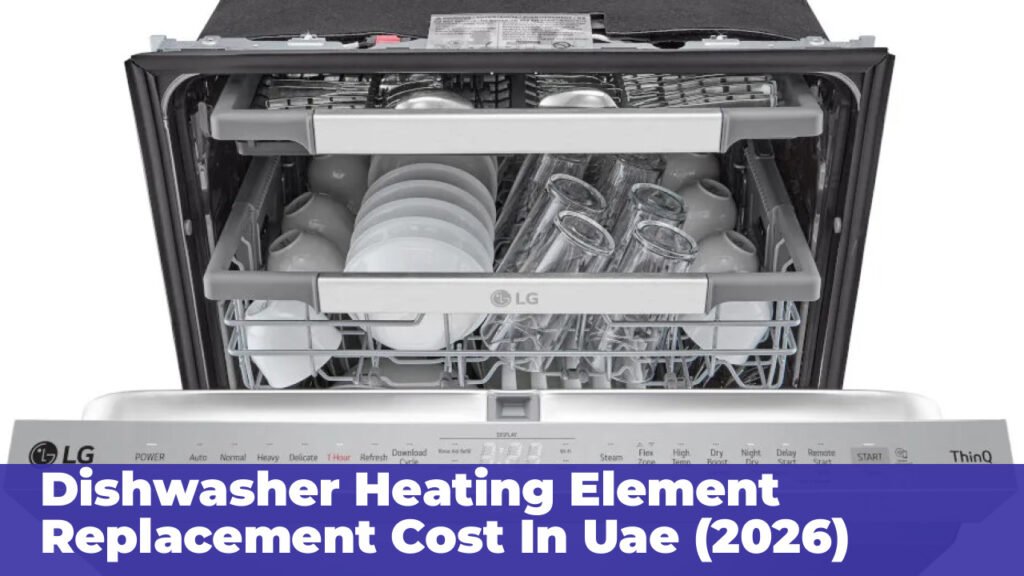
The modern UAE kitchen relies heavily on automated appliances to manage daily household chores across bustling urban centers like Dubai, Abu Dhabi, and Sharjah. Among these appliances, the dishwasher stands out as an essential workhorse that saves hours of manual scrubbing after family meals. However, opening the door at the end of a long wash cycle to discover a load of cold, dripping, and half-clean plates signals an immediate operational failure. This issue points directly to a broken heating element.
Understanding the dishwasher heating element replacement cost in the UAE requires examining both technical realities and local market pricing. From standard call-out fees to specialized parts sourcing and utility bill correlations, repairing this component involves specific financial and practical choices. UAE homeowners face unique environmental challenges, such as mineral-dense municipal water, which accelerates appliance wear and tear far faster than in many other regions.
This comprehensive guide delivers an in-depth breakdown of replacement expenses, diagnostic steps, hard water impacts, and energy penalty calculations. Whether you live in a high-rise apartment in Dubai Marina, a suburban villa in Arabian Ranches, or a family home in Sharjah, this technical breakdown provides the financial and operational clarity needed to make an informed repair decision.
Understanding the UAE Dishwasher Heating Element Replacement Cost
Comprehensive Cost Breakdown: Parts vs. Labor
Appliance repair pricing across the Emirates generally follows a structured model combining diagnostic fees, component costs, and technician labor. Standard diagnostic and call-out fees across UAE emirates range between AED 80 and AED 150. Reputable mobile repair companies typically waive this inspection fee if the customer approves and proceeds with the recommended service.
For standard residential dishwasher brands such as Bosch, Siemens, Samsung, LG, Beko, and Whirlpool, combined parts and labor pricing for a heating element replacement typically ranges from AED 250 to AED 450. This price point covers standard tubular or flow-through heating assemblies readily available in the regional supply chain.
Premium and built-in brands command higher pricing due to specialized manufacturing and importation overhead. For instance, replacing a heating element in a Miele or high-end integrated Gaggenau unit often reaches AED 600 to AED 800. These specialized German engineering systems require proprietary replacement parts that carry higher import tariffs and freight costs into the UAE.
Repair Versus Replacement Financial Audit
Deciding whether to fix an existing appliance or purchase a brand-new unit requires a careful financial comparison. Mid-range freestanding and built-in dishwashers in the UAE market cost between AED 1,500 and AED 3,500. Comparing this capital outlay against a minor repair bill highlights the immediate savings of fixing the existing machine.
A reliable guideline rule states that a repair is financially viable if the total cost remains under 50 percent of a brand-new replacement unit, provided the appliance is under eight years old. Spending AED 350 to replace a heating element in a five-year-old Bosch dishwasher preserves capital and prevents a functional appliance from entering the landfill prematurely.
The UAE Hard Water Factor: Why Elements Fail Prematurely
Anatomy of Scale Accumulation
Water quality across the UAE presents a unique engineering challenge for household heating appliances. Persian Gulf desalination processes supply municipal water that, while thoroughly treated and safe, contains high levels of dissolved calcium and magnesium. These minerals create aggressive total dissolved solids (TDS) levels within household plumbing.
When hard water enters a dishwasher and meets the hottest internal surface the tubular heating element a chemical transformation occurs. The intense heat forces dissolved minerals out of the water solution, causing them to precipitate and harden directly onto the metal coil. This process, known as limescale incrustation, acts as a thermal blanket that traps heat and eventually causes the internal resistance wire to overheat and burn out.
Lifespan Impact Across Emirates
Environmental stress directly dictates how long major appliance components survive in local homes. A residential dishwasher operating under proper maintenance protocols in the UAE typically achieves a functional lifespan of 10 to 12 years. However, unmaintained units operating without water softeners or descaling routines in high-hardness areas often experience major heating element failure within just 5 to 7 years.
Hidden Financial Penalties: DEWA Bill Correlation Analysis
How a Calcified Element Drives Up Energy Bills
Limescale buildup on a dishwasher heating element creates a dense thermal barrier. Because mineral scale does not conduct heat efficiently, the heating coil must work significantly harder and longer to transfer thermal energy into the wash water. This physical restriction requires up to 20 to 30 percent more electrical energy to reach standard sanitization temperatures ranging from 50°C to 70°C.
This prolonged operational cycle extends the heating phase of every wash program, drawing continuous high amperage from the household electrical grid. Over weeks and months, an unaddressed calcified heater silently inflates monthly electricity statements across Dubai and the Northern Emirates.
Concrete Calculation of Wasted Kilowatt-Hours and Dirhams
To understand the monetary impact under current Dubai Electricity and Water Authority (DEWA) utility tariff slabs, consider a standard 1,800-watt dishwasher heating element operating for 30 minutes per wash cycle over 25 washes a month:
- Standard energy consumption per cycle (heating phase): 0.9 kWh.
- Extra 25 percent energy penalty due to heavy limescale insulation: 0.225 extra kWh per cycle.
- Monthly excess energy consumption across 25 washes: approximately 5.625 kWh.
- Calculated across an annual cycle, this inefficiency wastes over 67 kWh of electricity purely on heating resistance barriers.
While the direct monetary waste on electricity bills may only equal AED 20 to AED 40 annually under baseline DEWA residential slabs, the secondary cost is far higher. The constant thermal stress shortens the operational lifespan of the heating assembly, leading to premature burnout and a sudden repair bill.
Signs Your Dishwasher Heating Element is Failing
Visible and Operational Symptoms
Recognizing the early warning signs of a failing heating element prevents secondary appliance damage and ensures spotless dishware. Common indicators include:
- Dishes remaining cold, wet, or un-sanitized at the conclusion of a standard intensive or normal wash cycle.
- Detergent residue left un-dissolved or caked inside the dispenser cup because the water failed to reach the activation threshold.
- Trip switches or domestic circuit breakers activating mid-cycle due to an internal electrical grounding short within the water-exposed heating coil.
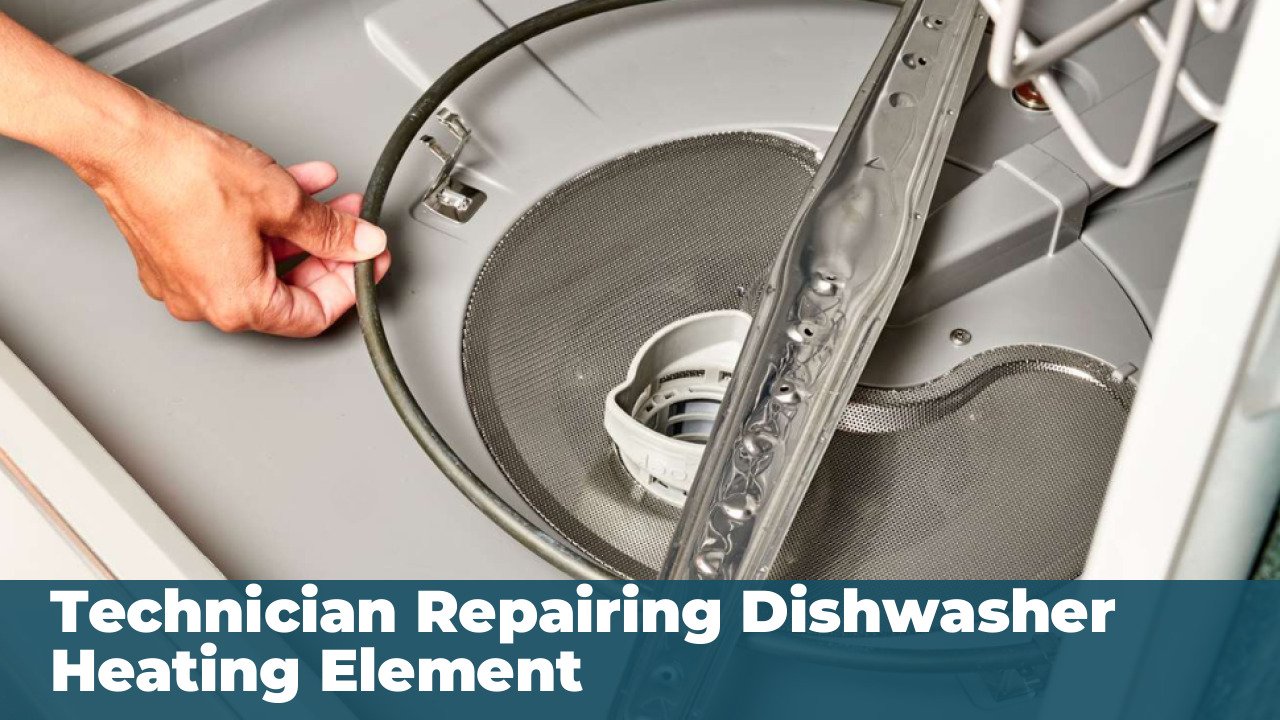
- Visible white crust, heavy flaking mineral deposits, or blistered, discolored metal observed on the lower interior heating coil upon visual inspection.
Step-by-Step Technical Troubleshooting and Multimeter Testing
Isolating the Heating Element Before Calling a Technician
Before scheduling a service call or purchasing spare components, verifying the electrical status of the heating element saves time and money. Always prioritize safety by completely unplugging the dishwasher from the wall socket and shutting off the water supply inlet valve beneath the kitchen sink.
Using a Digital Multimeter
Follow this systematic procedure to test the physical integrity of the heating assembly:
- Access the lower rear access panel or under-tub wiring terminals of the dishwasher by laying the unit carefully on its side or removing the kickplate.
- Disconnect the primary electrical power leads attached to the heating element terminals, ensuring no residual voltage is present.
- Set your digital multimeter to measure ohms (resistance symbol Omega), selecting the lowest resistance scale.
- Touch the multimeter probes to the two metal terminal posts of the heating element.
- Observe the display reading: a normal, healthy residential heating element typically registers between 15 to 30 ohms depending on its specific wattage rating.
- Interpret alternative readings: a display of zero ohms indicates an internal short circuit, while an infinite reading (OL or 1) signifies an open circuit or burned-out internal heating wire requiring immediate replacement.
Sourcing Appliance Spare Parts in the UAE
Local Parts Markets and Suppliers
Sourcing replacement components in the UAE is straightforward if you know where to look. Major industrial parts districts, such as the specialized spare parts markets in Deira, Dubai, and the industrial zones of Musaffah in Abu Dhabi, stock an extensive inventory of appliance components.
Homeowners can choose between genuine Original Equipment Manufacturer (OEM) parts and high-grade aftermarket alternatives. While OEM parts guarantee exact dimensional compatibility for brands like Bosch, Siemens, and Samsung, certified aftermarket alternatives offer a budget-friendly repair path for older appliances.
Online Sourcing and Delivery Realities
Regional e-commerce logistics have simplified parts acquisition across all seven emirates. Specialized online appliance parts platforms deliver directly to doorsteps in Dubai, Sharjah, and Ajman within 24 to 48 hours. Always verify your specific appliance model number found on the stainless steel rim of the dishwasher door before ordering to prevent compatibility mismatches.
DIY Replacement vs. Professional Mobile Technicians
The DIY Route: Risks and Realities
Tackling a dishwasher heating element replacement as a do-it-yourself project appeals to mechanically inclined homeowners. The procedure requires dismantling the lower base panel, disconnecting internal wiring harnesses, removing retaining clips, unsealing rubber tub gaskets, and carefully installing the new element assembly.
However, this path carries notable risks. Incorrectly re-sealing the rubber gasket can cause high-pressure water leaks that damage kitchen cabinetry or short-circuit floor electronics. Amateur wiring mistakes can damage the main control board and void existing home appliance insurance policies.
Hiring Professional Mobile Repair Services
For most residents living in dense urban developments like Downtown Dubai, Jumeirah Village Circle (JVC), Abu Dhabi City, or Sharjah, hiring mobile appliance repair technicians provides a secure alternative. Professional teams arrive fully equipped with diagnostic tools and replacement parts.
Reputable service providers in the UAE back their work with standard service warranties. Always confirm that the company offers a 30-day to 90-day workmanship guarantee alongside a 6 to 12-month manufacturer parts warranty before approving the repair.
Preventative Maintenance Calendar for UAE Homes
Combatting Limescale Proactively
Preventing premature heater failure in the UAE requires a proactive maintenance schedule tailored to local water conditions:
- Run a monthly deep-cleaning cycle using specialized citric acid crystals or commercial dishwasher descaling agents to strip away fresh mineral accumulation.
- Adjust your dishwasher’s internal water softener settings based on local municipal water hardness testing kits to neutralize dissolved calcium effectively.
- Perform routine inspections and cleaning of lower filters and rotating spray arms to maintain optimal water circulation over the heating element surface.
Conclusion
Addressing a dishwasher heating element failure promptly protects your kitchen routine and prevents secondary damage to your appliance. With professional replacement costs ranging from AED 250 to AED 450 for standard brands, repairing the unit remains far more economical than purchasing a brand-new appliance priced between AED 1,500 and AED 3,500.
By understanding local hard water challenges, monitoring energy efficiency, and implementing regular descaling routines, UAE homeowners can maximize the operational lifespan of their dishwashers. Whether you choose a DIY fix or hire a certified mobile technician in Dubai or Abu Dhabi, prompt action ensures your kitchen stays efficient and hygienic year-round.
Frequently Asked Questions
How long does a dishwasher heating element replacement take?
Professional technicians typically complete diagnostic testing and element replacement within 45 to 90 minutes directly on-site in your home.
Can I run my dishwasher if the heating element is broken?
Yes, the machine will still wash dishes using unheated tap water, but sanitization will fail and powder or tablet detergent may not dissolve properly.
Is it cheaper to repair a Bosch dishwasher heater in Dubai or buy a new one?
Repairing a heater costs between AED 250 and AED 450, which is significantly cheaper than purchasing a new mid-range Bosch unit priced from AED 1,800 to AED 3,500.
Do UAE repair companies offer warranties on heating element replacements?
Reputable service providers across Dubai, Abu Dhabi, and Sharjah provide a 30 to 90-day labor warranty alongside standard manufacturer parts guarantees.
How does hard water in Sharjah and Ajman affect dishwasher elements?
High mineral content creates thick limescale layers that insulate the heating coil, forcing the internal wire to overheat and burn out prematurely.