

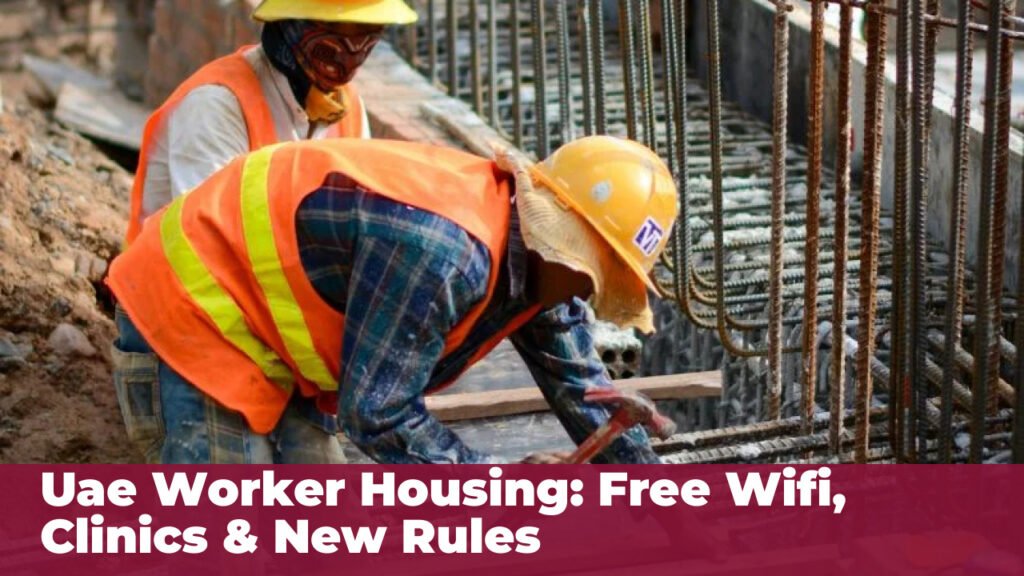
The landscape of labor welfare in the United Arab Emirates continues to evolve rapidly. Recent directives issued by the Ministry of Human Resources and Emiratisation (MoHRE) introduce important updates for worker accommodations nationwide. These regulations move far beyond basic compliance, establishing a framework centered on human dignity, digital inclusion, and comprehensive healthcare. For businesses operating in construction, manufacturing, and logistics across Dubai, Abu Dhabi, and the Northern Emirates, understanding these mandates is vital for operational continuity and legal adherence.
This guide covers what employers, developers, and workers need to know about the updated housing framework. We will examine the exact infrastructural requirements, the mandate for free internet and round-the-clock medical clinics, UAE government enforcement policies, and practical steps to achieve full compliance.
The Evolution of Worker Welfare Standards in the UAE
Millions of expatriate workers drive the economic engine of the United Arab Emirates. Recognizing their contribution, the UAE government updates labor laws to ensure safe, secure, and healthy living environments. Earlier milestones included mandatory midday break rules during peak summer months and the Wage Protection System (WPS) to guarantee timely salary disbursements.
The latest housing directives represent the next step in this journey. Authorities realized that providing four walls and a roof is not enough. Workers require environments that support mental health, physical recovery, and personal connectivity. By raising the bar for labor accommodations, the UAE strengthens its reputation as a human-centric economy and a destination for international talent.
Core Infrastructure and Safety Mandates for Employers
Under the revised MoHRE guidelines, companies housing large workforces must adhere to strict structural and environmental baselines. These rules apply heavily to enterprises employing larger staff numbers, ensuring that high-density living never compromises personal health or safety.
Key physical requirements enforced across all approved housing facilities include:
- Space Allocation: A minimum floor space of 3 square meters per individual to prevent overcrowding.
- Climate Control and Ventilation: Robust air conditioning, industrial-grade ventilation, and optimal lighting tailored to withstand the regional climate.
- Sanitation and Hygiene: Regular pest control systems, modernized waste disposal, clean kitchen and dining areas, and reliable access to drinking water.
- Strategic Location: Accommodations must sit within designated industrial zones or near efficient transport networks while maintaining safe distances from high-risk environmental zones.
Mandatory Digital Inclusion: Free Internet in Worker Housing
One of the notable advancements in the recent policy rollout is the legal requirement for employers to provide free, high-speed internet access within worker residential complexes. In today’s connected world, digital access is a practical necessity.
For expatriate workers living away from their families, reliable internet connectivity offers psychological benefits. It allows daily video calls with spouses and children, management of personal finances, and access to online educational or entertainment resources. Employers who embrace this mandate often notice a boost in worker morale, loyalty, and overall mental well-being.
Advanced Healthcare Access: 24/7 Clinics and On-Site Medical Teams
Access to rapid medical intervention can mean the difference between minor treatment and critical health emergencies. The updated framework introduces tiered healthcare obligations depending on the scale of the residential facility.
For large-scale accommodations housing 1,000 workers or more, the rules are definitive:
- Round-the-clock medical clinics operating 365 days a year.
- Dedicated on-site licensed doctors and professional nursing staff.
- Fully equipped first-aid rooms and designated isolation spaces for contagious illnesses.
- Readily available emergency response plans integrated with local ambulance services.
Smaller facilities must maintain fully stocked first-aid stations and establish rapid-response protocols with nearby regional hospitals and clinics.
Recreation, Multilingual Communication, and Mental Health
Physical health relies on mental well-being as well. MoHRE guidelines require accommodation managers to cultivate community environments. Facilities must incorporate indoor and outdoor recreational zones, including spaces for sports, physical fitness, and quiet relaxation.
Additionally, housing operators must arrange structured social and recreational activities, particularly during official national holidays and weekends. To clear any administrative friction and protect worker rights, all guidelines, emergency protocols, and grievance mechanisms must be displayed clearly in multiple languages spoken by the workforce.
Enforcement, Government Oversight, and Penalties for Non-Compliance
The UAE government utilizes digital monitoring and physical inspections to ensure absolute adherence to these housing standards. MoHRE inspectors possess the authority to conduct unannounced audits of labor accommodations across all emirates.
Employers who fail to upgrade their facilities or neglect mandatory amenities face regulatory repercussions. Penalties for non-compliance include:
- Monetary fines levied against the corporate entity.
- Immediate suspension of new work permit applications and labor quotas.
- Temporary or permanent business operational restrictions.
- Legal prosecution for severe violations endangering worker safety.
Frequently Asked Questions
Which companies are affected by the new housing rules?
The regulations primarily target medium to large enterprises, with a specific focus on organizations housing workers in communal accommodations. Companies failing to meet standard welfare brackets face MoHRE scrutiny.
Is internet access optional for employers?
No. Providing free internet connectivity in labor housing is a mandatory compliance requirement under the updated Ministry guidelines.
What happens if a facility houses more than 1,000 workers?
Accommodations housing 1,000 or more employees are legally required to operate 24-hour medical clinics equipped with resident doctors, professional nurses, and dedicated emergency ambulance support.
How can workers report substandard housing conditions?
Workers can file confidential complaints directly through the official MoHRE smartphone application, call the ministry’s dedicated helpline, or utilize multilingual guidance notices displayed inside their accommodation blocks.