

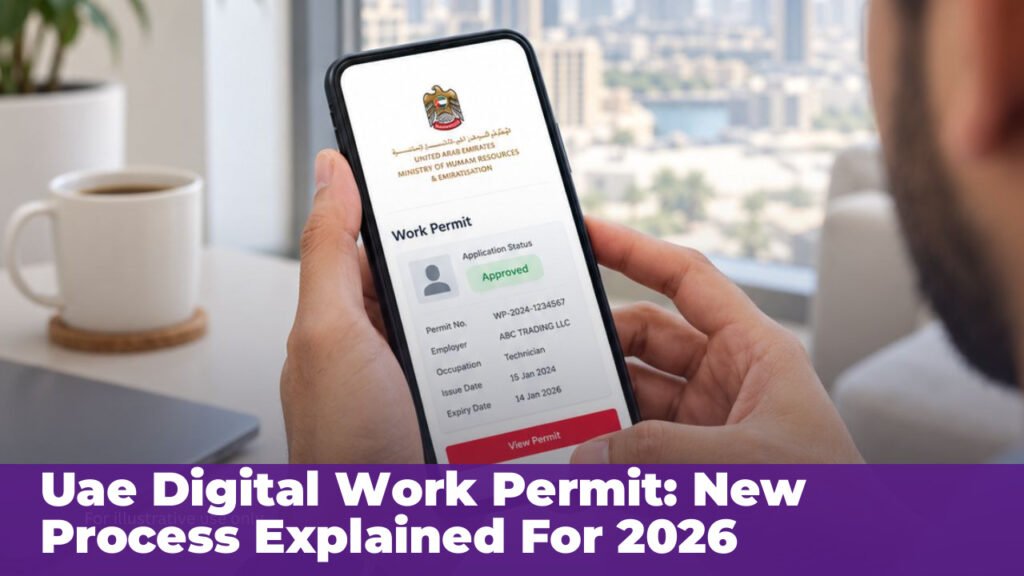
Navigating the United Arab Emirates employment market requires strict adherence to federal laws, especially when bringing international talent into the country. The Ministry of Human Resources and Emiratisation (MoHRE) has overhauled overseas hiring through a fully digital work permit system. This guide covers everything you need to know about the application process, government regulations, employer responsibilities, fee structures, and compliance rules.
The UAE Digital Work Permit System
The digital work permit service is designed primarily for mainland establishments registered with MoHRE. When companies hire professionals from abroad, they no longer rely on stacks of physical paperwork. Instead, HR teams use integrated digital platforms like the Work Bundle system to process recruitment electronically.
This digital shift speeds up processing times significantly. While traditional applications once took weeks of back-and-forth bureaucracy, automated verification tools now cross-check documents instantly. However, faster processing does not mean relaxed standards. Employers must still comply with all labor regulations, provide accurate job offers, and secure the appropriate establishment quotas before any work authorization is granted.
Who Applies for the Work Permit?
A common misconception among international job seekers is that they can independently apply for a UAE work permit from their home country. In reality, the legal framework requires the employer to initiate and manage the entire application.
Registered UAE companies must sponsor incoming workers. Before submitting an application through MoHRE channels, the employer must verify that their trade license is active, has no pending violations, and possesses the necessary employment visa quota. The worker’s role must also match the company’s registered business activities.
Step-by-Step Overview of the New Process
Moving from an overseas job offer to legal residency involves several structured stages. Understanding each step helps both employers and employees avoid costly mistakes.
1. Job Offer Issuance and Signing
The process begins when a UAE employer extends an official job offer. Candidates should review the base salary, allowances, job title, working hours, and probation periods closely. Once both parties sign the contract, it serves as the legal foundation for the MoHRE application.
2. Digital Submission via MoHRE
The employer uploads the signed contract, passport copy, professional certifications, and a passport-sized photograph onto the MoHRE portal. Automated verification systems scan these files for errors, flagging discrepancies immediately to prevent rejections.
3. Entry Permit Issuance
Once MoHRE approves the work permit, the system generates an entry permit, often called a pink visa. This document allows the candidate to travel legally into the UAE if they are currently living abroad.
4. Arrival and Post-Entry Formalities
Upon landing in the UAE, the candidate completes a mandatory medical fitness test at an approved health center, which includes blood work and a chest X-ray. At the same time, the employer applies for the Emirates ID through the Federal Authority for Identity, Citizenship, Customs and Port Security (ICP).
UAE Government Rules on Recruitment Costs
Federal Decree-Law No. 33 of 2021 strictly regulates employment fees in the UAE. Employers must bear the full financial burden of recruitment. Under no circumstances should a candidate pay for their own work permit, medical test, visa stamping, or agency recruitment fees.
Job seekers should watch out for third-party recruiters demanding upfront cash for guaranteed jobs. Legitimate employers cover all visa-related expenses, government fees, and mandatory health insurance.
Fee Breakdown and Processing Timelines
MoHRE work permit issuance fees typically range from AED 250 to AED 3,450, depending on the establishment’s classification category (A, B, or C).
- Work Permit Issuance: AED 250 – AED 3,450
- Medical Fitness & Emirates ID: AED 500 – AED 1,000
- Residence Visa Stamping: AED 1,000 – AED 3,000
- Total Estimated Package: AED 2,000 – AED 7,500
Streamlined digital workflows mean the initial work permit and entry visa can usually be secured within 3 to 5 working days. The complete cycle from job offer acceptance to final residence visa stamping generally spans two to six weeks.
Common Reasons for Work Permit Rejections
Even with digitized systems, applications can still face rejection if basic criteria are missed. Common setbacks include:
- Inconsistent passport details or blurry document uploads.
- Active previous residence visas that were not formally canceled by an old sponsor.
- Establishment quota exhaustion or expired trade licenses.
- Unresolved labor disputes or Wage Protection System (WPS) non-compliance.
Frequently Asked Questions
Can I work in the UAE on a visit visa while my permit processes?
No. Working while on a tourist or visit visa violates UAE immigration law and carries severe penalties, including heavy fines and deportation.
What happens if my work permit expires?
Employers must monitor expiration dates closely. Operating with an expired permit exposes both the company and the employee to administrative fines and invalidates health insurance coverage.
Are freelance professionals eligible for digital permits?
Yes. The UAE government provides alternative pathways, such as Green Visas and self-sponsored freelance permits, allowing independent professionals to operate legally without traditional corporate sponsorship.